Petit Point Embroideries
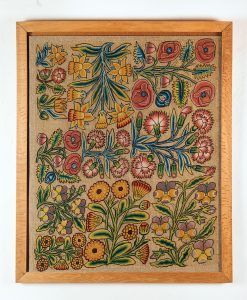
No other house has such a fine collection of fine tent stitch (petit point) embroideries depicting flowers, fruits and animals. They were called slips or “cuttings”, such as gardeners take for the vegetative propagation of plants. They were copied from woodcuts published in Herbals in the late 1500’s.
The motifs on the panels were intended to be cut out and applied to bed hangings, wall hangings and other furnishings to add colour and warmth to the chilly interior of the stone-built house. However, these panels were never used and were carefully stored away in the house only to be rediscovered in the 1950’s by Francis Maxwell Stuart, 19th Laird of Traquair. The collection contains many unfinished pieces, perhaps familiar to those who have undertaken a needlework project and have put it away intending to finish it a later date.
It was this type of embroidery that Mary Queen of Scots sent for when she was a prisoner in Loch Leven, “little flowers on canvas” drawn out for her and outlined in black cross stitch, that she filled in with coloured silks. The same method was used in the Traquair panels, as we see when we look at the unfinished pieces.